A new variant of COVID-19?
By: Prajna D
Months have passed since the beginning of the pandemic that has changed life for everyone. Advances have been made in the medical field that led to a vaccine being put into use – mainly only for medical professionals at this point. Many more months may pass until everyone can truly go back to their normal lives, however, the world continues to remain under lockdown due to the emerging variant of COVID-19.
A new mutant of COVID-19 has emerged in the UK, and it has affected people throughout London and Southeast England. Information about this new strain has not yet been properly collected at this time, but it has the potential to be more transmissible than the original disease. Thus, the accuracy of the current vaccine is being questioned with regards to providing adequate immunization against SARS-CoV-2 VOC 202012/01, the name for this strain. Currently, about 60% of recent cases in southeast England have been caused by the variant form, which is a result of several mutations in the amino acid sequence of the original virus. The presence of this strain in the United States has not been detected but is very possible due to the low number of sequenced individuals. The way in which this mutation affects humans has not yet determined, however it is known that the mutation leads to a tighter binding to a particular enzyme known as the human angiotensin-converting enzyme 2 (ACE2) receptor. This new mutation (and other mutations that may arise) could have severe effects in the progress that has been made by the medical industry.
Without proper information and safety precautions, this virus may extend the time the world stays in lockdown. This makes it that much more important to practice social distancing and to limit international travels in order to quickly eliminate the diseases that have been affecting the world for much too long.
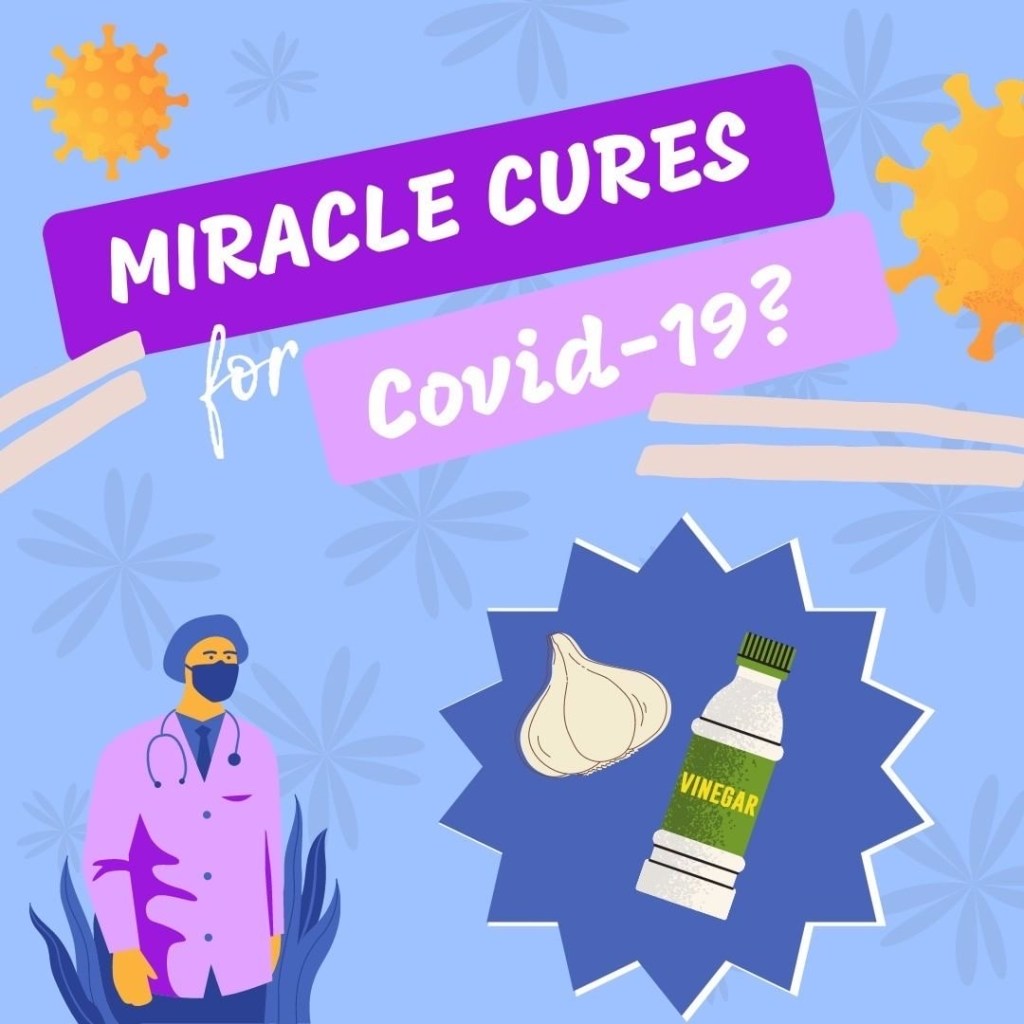

ideAre there any “miracle cures” for COVID-19?
By: Saivishnu Tulugu
Since the initial coronavirus outbreak in December 2019, there have been many individuals claiming to hold miracle supplements or diets that cure the symptoms associated with COVID-19. This article will evaluate the medical efficacy of these claims and lay the current dietary recommendations recommended by the CDC.
On popular social media platforms such as Instagram and TikTok, influencers have been promoting substances such as apple cider vinegar and garlic as miracle cures for the virus. Dr. Russell Greenfield, a physician at Novant Health, explains that while healthy consumption of these products may not be harmful, ingesting excessive quantities of these substances to “cure” COVID-19 can have dangerous side effects (Six). An example of this is the mobilization of an excessive amount of cytokines. While cytokines play an essential role in eliciting the body’s immune system, an excessive quantity of these proteins can overwhelm the body and create a cytokine storm which can cause the immune system to attack healthy body cells (Fajgenbaum & June).
So are there any specific things you can consume to allow for faster recovery from COVID-19? Well, yes and no. Unfortunately, currently, there is no food that has been shown to directly improve recovery from COVID-19. However, research has suggested Vitamin C and Vitamin D may reduce symptoms and lead to faster recovery. Researchers at the University of Minnesota concluded that individuals who supplemented with Vitamin D were less likely to suffer severe COVID symptoms than those who didn’t (Weir et. al). As for Vitamin C, the CDC suggests that since there are many natural sources individuals can consume foods such as oranges, broccoli, and bell peppers to support the immune system.
All in all, individuals should remember to carefully peruse health information prior to implementing it and not fall for any products claiming to be a miracle cure for COVID-19. While Vitamin C and Vitamin D have been associated to improve health outcomes, individuals should consult with their physician prior to starting a new supplement. It is also important to remember that diet is just one part of ensuring good health and other components such as sleep, mental well-being, and exercise should also be considered.
Work Cited
A new variant of COVID-19?
CDC. (2020, December 29). Interim: Implications of the Emerging SARS-CoV-2 Variant VOC 202012/01. https://www.cdc.gov/coronavirus/2019-ncov/more/scientific-brief-emerging-variant.html
ideAre there any “miracle cures” for COVID-19?
CDC. (n.d.). Food and Coronavirus Disease 2019 (COVID-19). Retrieved January 06, 2021, from https://www.cdc.gov/coronavirus/2019-ncov/daily-life-coping/food-and-COVID-19.html
Fajgenbaum, D. C., & June, C. H. (2020). Cytokine Storm. New England Journal of Medicine, 383(23), 2255-2273. doi:10.1056/nejmra2026131
Six, H. (2020, October 07). Which natural remedies to take – and avoid – for colds, flu and COVID-19. Retrieved January 06, 2021, from https://www.novanthealth.org/healthy-headlines/which-natural-remedies-to-take-and-avoid-for-colds-flu-and-covid-19
Weir, E. K., Thenappan, T., Bhargava, M., & Chen, Y. (2020). Does vitamin D deficiency increase the severity of COVID-19?. Clinical medicine (London, England), 20(4), e107–e108. https://doi.org/10.7861/clinmed.2020-0301
 Medical Wonders