Welcome to September’s second edition! Scroll on below to learn about osteosarcoma!
Novel Therapies in the Treatment of Osteosarcoma
By Saivishnu Tulugu
Osteosarcoma is a form of bone cancer that typically occurs in long, hollow bones such as those in extremities. This disease results in the development of a tumor in areas where osteoblasts form rapidly (American Cancer Association). Due to the need for rapid growth, osteosarcoma often occurs in children or adults in their 20s. These tumors are classified based on the size, shape, and growth and can be placed into three distinct categories: low-grade, intermediate, and high-grade. This article will evaluate the current treatment methods for intermediate and high-grade osteosarcomas and introduce new therapeutics being researched in order to mitigate the effects of this disease.
Current treatment for this cancer involves highly invasive surgeries paired with some sort of chemotherapy. However, these methods are not only overly invasive but also are shown to be ineffective in many cases. In fact, a study from the American Cancer Society found that chemotherapy was only effective in roughly 10% of all patients who suffered from osteosarcoma. Furthermore, extensive surgeries such as limb replacement and amputations are associated with wound necrosis, infection, and bone overgrowth (Jaffe et. al 2002). Thus, there is a need for more precise treatment methods for this disease.
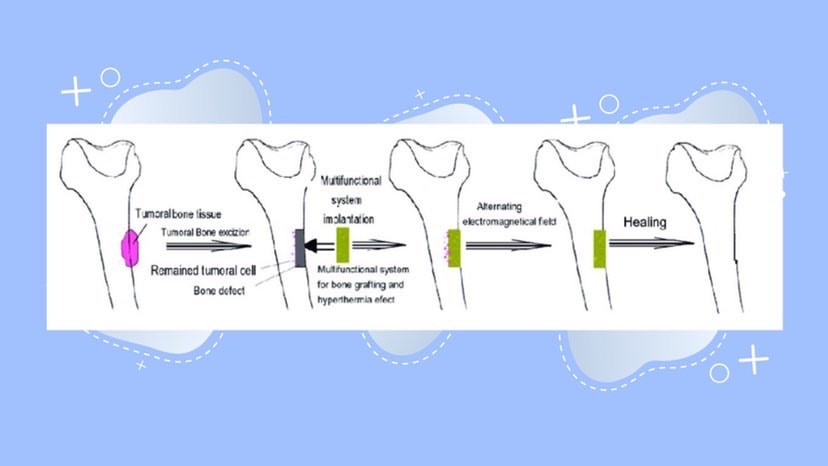
One prospective treatment is immunomodulation. While this treatment is usually used for inhibiting viral replication for infectious diseases, this technique has shown some initial success in clinical trials. Another potential treatment lies in Granulocyte-Macrophage Colony-Stimulating Factor (GM-CSF). In these treatment methods, the cytokine present in the human body is activated in order to prevent osteoblasts from dividing (Ando et. al 2013). This in turn leads to diminished growth of the cancer treatment and eventual destruction from the body’s immune system. Other treatment methods involve morphing current treatment drugs to make them more effective so that they target cells only involved with cancer. Using this form of precision medicine techniques will mitigate the effects usually associated with chemotherapy.
Overall, as the fields of biotechnology and medicine continue to grow, new treatments look promising in the treatment of osteosarcoma. If development continues growing at this rate, this malignant bone cancer could be a disease of the past.
Works Cited:
Ostesarcoma:
Ando, K., Heymann, M., Stresing, V., Mori, K., Rédini, F., & Heymann, D. (2013). Current Therapeutic Strategies and Novel Approaches in Osteosarcoma. Cancers, 5(4), 591-616. doi:10.3390/cancers5020591
Jaffe, N., Carrasco, H., Raymond, K., Ayala, A., & Eftekhari, F. (2002). Can cure in patients with osteosarcoma be achieved exclusively with chemotherapy and abrogation of surgery? Cancer, 95(10), 2202-2210. doi:10.1002/cncr.10944
What Is Osteosarcoma? (2018, January 29). Retrieved September 09, 2020, from https://www.cancer.org/cancer/osteosarcoma/about/what-is-osteosarcoma.html
 Medical Wonders