Welcome to the 2nd edition of July’s neuroscience highlight! Scroll below to read what’s inside!

Interested in neurology? Here’s how you can become a neurologist.
By Saivishnu Tulugu
A neurologist is a physician who works to study, diagnose, and treat disorders related to the nervous system, which is a complex network of nerves and cells that carries messages to the brain, spinal cord, and various parts of the body. Their area of expertise includes a wide array of mental health disorders, neurodegenerative disorders, and neurological conditions affecting the whole body.
For students interested in a prospective career in neurology, the path is arduous but rewarding. Before joining medical school, students must complete undergraduate education from an accredited institution. Although there is no required major, many students interested in neurology major in a subject related to biology, chemistry, or psychology. During their pre-med years, students must complete typical pre-med prerequisites with core subjects in the sciences and humanities. Then, students must take the Medical College Admission Test (MCAT) to gain matriculation into a MD or DO medical school.
During their medical school years, students will be allowed to explore different medical subspecialties, but will have the opportunity to do extra electives in areas that fascinate them. Students aspiring to be neurologists should consider doing electives in neurosurgery or specialized areas of neurology such as pediatric neurology. After medical school, most students go on to pursue a general internship for internal medicine or general surgery.
After completion, students should attend an accredited neurology residency program for at least three years. That’s the journey to becoming a neurologist! Although lengthy and intricate, many neurologists explain that their passion for the subject and excitement for the job makes up for the extensive journey.
Procedure Spotlight— An Abnormal Psychosurgery: Lobotomies
By Jayleen Vilma
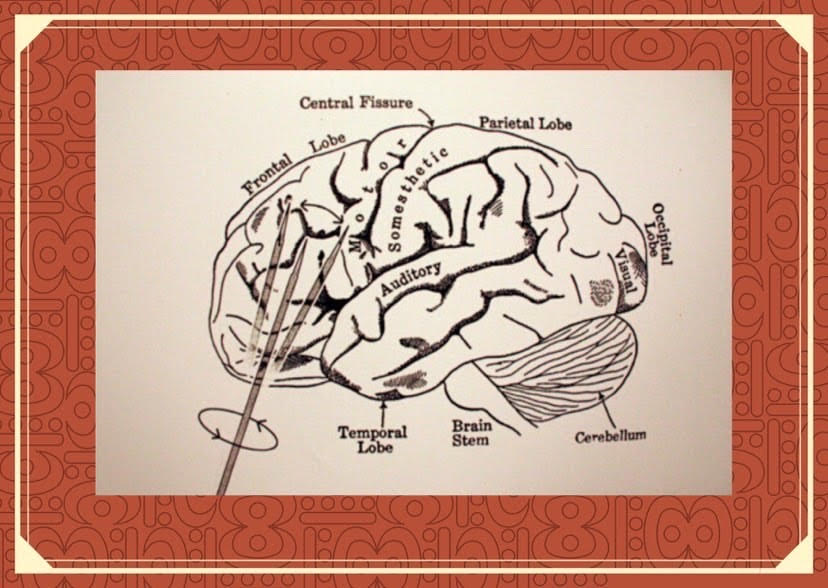
In 1933, two Yale neurologists, Dr. John Fulton and Dr. Carlyle Jacobson, performed experiments on two monkeys named Lucy and Becky. The two neurologists would test Lucy and Becky’s intelligence, remove half of their brains’ frontal lobes, and then retest them. They found that the monkeys maintained their intelligence, and thus repeated the experiment but chose to instead remove the other half of Lucy and Becky’s frontal lobes; they found that the monkeys no longer became hostile when not receiving a treat after completing a test. The doctors tested the monkeys again, and despite being able to complete the tests, they did not perform as well. Portuguese neurologist Antonio Egas Moniz took notice of the experiments and research presented by Dr. Fulton at a conference, and recognized the parallel between the monkeys and mentally ill patients. After practicing on cadavers and having performed his first successful lobotomy on one of his patients, Moniz shared his findings at conferences and in medical journals.
Many psychiatrists expressed their concerns and frustrations, believing that lobotomies would destroy healthy parts of the brain. However, many neurologists and psychiatrists were still perplexed at the idea of this psychosurgery. Lobotomies were officially recognized in 1935 by Moniz, after the procedure was perceived to “reduce mental illness” in individuals who suffered from mental health disorders such as schizophrenia, depression, and bipolar disorder. Though controversial, Dr. Moniz soon received the Nobel Prize in 1949 for his discoveries.
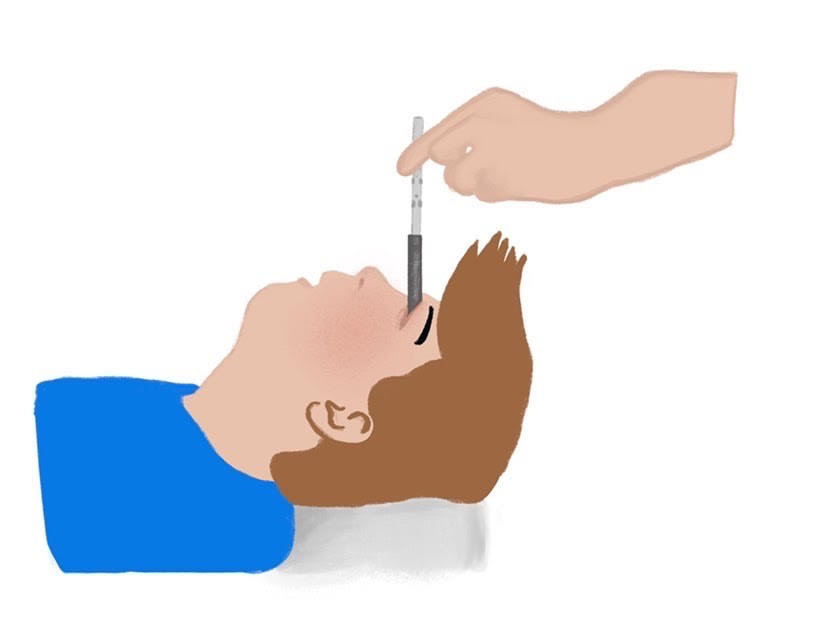
The earliest lobotomy procedures involved drilling holes in the skull on either side of the prefrontal cortex (this cortex is responsible for planning, personality, and complex behavior) and injecting alcohol to eliminate white matter. White matter is made up of nerve fibers that connect areas of gray matter (gray matter contains neurons and blood vessels). This process was found to be unproductive, as it was damaging other parts of the brain. This challenge led to the introduction of the leucotome tool; after drilling holes in the skull, doctors would use a leucotome to scoop out white matter in the prefrontal cortex while keeping other parts of the brain mostly intact. However, while the psychosurgery was meant to cure any mental illnesses, it included many negative side effects. These side effects negatively impacted a patient’s personality, empathy, inhibitions, and ability to function on their own, and were also accompanied by bowel and bladder problems, vomiting, and increased body temperature.
An infamous case of a lobotomy psychosurgery is that of Rosemary Kenndey’s, the sister of John F. Kennedy. In 1941 at age 23, Rosemary was lobotomized as a result of “rebellious and moody” behavior throughout her teenage years. Due to this, a doctor recommended Rosemary to undergo a prefrontal lobotomy in hopes of calming her down. The surgery did subdue Rosemary’s defiant behavior, as she now had “the mental capacity of an infant” (Freeman). Unfortunately, she was unable to control several bodily functions nor speak fluently, which led the rest of her life being spent in an institution. As one doctor put it, “…through lobotomy an insane person is changed into an idiot” (Gray, 162).
Lobotomies have lost popularity since the 1950s due to the rise of safer treatments, such as antipsychotic drugs and psychotherapy. But even with the rise of pharmaceutical drugs, concerns over the lobotomy increasingly grew over the years. Dr. Nicolai Oseresky, a psychiatrist, stated that lobotomies “violate the principles of humanity” (Freeman). They are now rarely performed, and are seen as a “last resort” if all other methods fail.
Works Cited:
Neurology:
Neurology at Highland Hospital. (n.d.). Retrieved July 18, 2020, from https://www.urmc.rochester.edu/highland/departments-centers/neurology/what-is-a-neurologist.aspx
Procedure Spotlight:
Freeman, Shanna. “How Lobotomies Work.” HowStuffWorks Science, HowStuffWorks, 27 Jan. 2020, science.howstuffworks.com/life/inside-the-mind/human-brain/lobotomy1.htm.
Lewis, Tanya. “Lobotomy: Definition, Procedure & History.” LiveScience, Purch, 29 Aug. 2014, http://www.livescience.com/42199-lobotomy-definition.html#:~:text=The%20Portuguese%20neurologist%20Ant%C3%B3nio%20Egas,revoke%20the%20prize%2C%20unsuccessfully).
Sammy, Melissa. “’Barbaric’ Medical Practices Still Used Today.” MDLinx, 17 June 2019, http://www.mdlinx.com/article/-barbaric-medical-practices-still-used-today/lfc-3762.
“The Silent.” The Mind Club: Who Thinks, What Feels, and Why It Matters, by Daniel M. Wegner and Kurt James Gray, Penguin Books, 2017, pp. 161–162.
 Medical Wonders