Our research and editor team have put together the first edition of our monthly highlight on neuroscience! Scroll below to explore our articles!

Neurosurgery: What Being a Neurosurgeon Really Means
By Shania Ali
While most people believe that being a neurosurgeon simply means performing brain surgery, there is so much more to it than just that. A neurosurgeon is a doctor that specializes in neurosurgery and works on treatments such as cerebrovascular disorders, neck and back pain, tumors, diseases of the brain, diseases of the spinal cord, and other problems that relate to the central nervous system. They work on patients of all ages and are on call for emergency room physicians as well. Although neurosurgeons are medically trained to perform extensive surgeries, they try to minimize invasion by performing non-operative treatments plans before considering surgery.
The path to becoming a neurosurgeon is a long but worthwhile journey. First, they are required to earn a bachelor’s degree at a college or university on the pre-med track. The pre-med undergraduate education consists of a year of chemistry with lab courses, a year of organic chemistry with lab courses, a year of biology with lab courses, a year of physics with lab courses, a year of english, and a year of calculus or other math including statistics. Then, they study for four years at a medical school, resulting in an M.D. or D.O. degree. Next, they complete one year of internship in general surgery and five to seven years in a neurosurgery residency program. After this long process, they complete a fellowship in a certain area of their choice, such as pediatric neurosurgery, peripheral nerve surgery, or spinal surgery. (“Neurologists vs. Neurosurgeons”, n.d)
Like every field within medicine, there are both advantages and disadvantages. The benefits of being a neurosurgeon are being able to help people with the most horrible neurological diseases, performing research, and meeting accomplished and motivated colleagues. On the contrary, neurosurgeons may have to deal with an unbalanced life due to extensive hours and training, and they inevitably have to experience patient suffering and death. Nonetheless, the advantages of the profession still outweigh the downsides! (“Interested in Neurosurgery as a Career”, n.d)
Neuroscience in Medicine: Procedure Spotlight
By Pallavi Vemuri
Electric storms may sound like a superpower pulled out of some post-apocalyptic zombie movie, but they are actually the cause of severe epileptic seizures. A fascinating procedure known as corpus callosotomy is known to relieve these electric storms and stop the seizures.
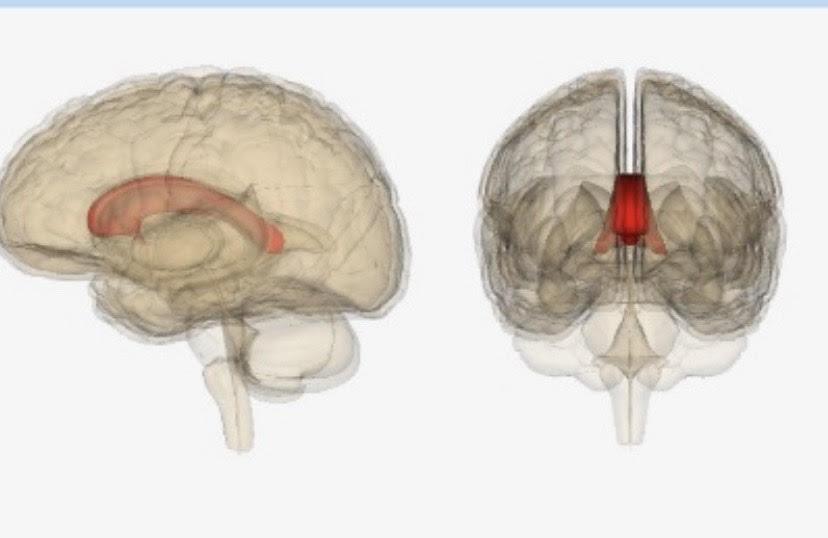
The brain works by firing electric signals that aid in communication between different parts of the body. However, for those with severe epileptic seizures, electric storms reverberate throughout the brain and cause excruciating pain and loss of senses. One way to contain these electric storms is a split-brain surgery called corpus callosotomy. This drastic procedure is pretty self explanatory—neurosurgeons cut the corpus callosum, a part of the brain that connects the left and right hemispheres, and split the brain in half.
After the total split of the corpus callosum, communication between the two hemispheres weakens and becomes less efficient. This damage to the corpus callosum can cause changes in behavior and overall activity, otherwise known as split-brain syndrome. Longitudinal studies with split-brain patients have shown that their left and right brain operate independently. This means the patient can effectively write with both hands at the same time, but may not be able to coordinate what is being written. Language comprehension exists primarily in the left brain, so the right hemisphere would not receive the transmitted information (Split Brains 2012).
The lateralization of the brain (the concept that each hemisphere has a specific role) was first discovered by Roger Sperry. He studied primates without a corpus callosum and moved on to study humans with split brain surgeries, and found that while, for the most part, quality of life is not significantly disrupted by a split brain surgery, the two hemispheres can no longer communicate (The Embryo Project 2017).
Works cited:
Neurosurgery:
The Center. (n.d.). Neurologists vs. neurosurgeons. The Center Oregon. https://www.thecenteroregon.com/medical-blog/neurologists-vs-neurosurgeons/
Cohen-Gadol, A. (n.d.). Interested in neurosurgery as a career. The Neurosurgical Atlas, Medical Student Guide for Matching in Neurosurgery. https://doi.org/10.18791/nsatlas.v10.ch02
Procedure spotlight:
Brogaard, Berit. Split Brains. 6 Nov. 2012,
http://www.psychologytoday.com/us/blog/the-superhuman-mind/201211/split-brains.
“The Embryo Project Encyclopedia.” Roger Sperry’s Split Brain Experiments (1959–1968) |
The Embryo Project Encyclopedia, embryo.asu.edu/pages/roger-sperrys-split-brain-experiments-1959-1968.
 Medical Wonders
Love this article!
LikeLiked by 1 person
Good job guys!
LikeLiked by 1 person
Enjoyable read! Love how the articles complement each other.
LikeLiked by 1 person
Great articles! Really enjoyed them.
LikeLiked by 1 person
So thorough and informative. Keep it up guys!
LikeLiked by 1 person